

Coffee isn’t just a morning ritual; it’s a global phenomenon that fuels economies and awakens sleepy souls. The coffee trade connects farmers in far-off lands to caffeine enthusiasts in bustling cities, creating a rich tapestry of culture, commerce, and, let’s be honest, a whole lot of buzz. Who knew a tiny bean could pack such a punch?
As the world sips its way through lattes and espressos, the coffee trade faces challenges and opportunities that could make even the most seasoned barista spill their beans. From fair trade practices to sustainability, it’s a complex brew that’s worth exploring. So grab your favorite mug and settle in, because the journey of coffee from farm to cup is as fascinating as it is frothy.
Overview Of Coffee Trade
Coffee trade plays a vital role in the global economy. It involves a complex network of producers, exporters, importers, roasters, and retailers. Approximately 125 million people rely on coffee farming for their livelihoods. Brazil, Vietnam, and Colombia dominate coffee production, accounting for over 60% of the world’s export supply.
The trade of coffee encompasses various forms, including green bean sales, roasted beans, and instant coffee. Global consumption continues to rise, with 166 million 60-kilogram bags consumed in the 2021-2022 coffee year. In addition to traditional markets, specialty coffee gains popularity, highlighting quality and unique flavor profiles.
Fair trade practices significantly impact the coffee industry. They aim to establish equitable trading relationships between farmers and consumers. Fair trade certification ensures that producers receive a stable income, promoting sustainable farming practices. Approximately 1.6 million farmers participate in fair trade programs worldwide, contributing to ethical consumption.
Sustainability remains a critical concern in coffee trade. Climate change affects coffee production directly, resulting in shifts in growing regions and reduced yields. Innovative approaches, such as shade-grown coffee and organic farming, address environmental issues while improving coffee quality.
Traceability in the coffee supply chain becomes increasingly important. Consumers show interest in knowing the origins of their coffee, driving demand for transparency. Technologies that enhance tracking and reporting of coffee’s journey from farm to cup gain traction, fostering trust among consumers.
Investments in coffee-growing communities facilitate economic development. Programs that support education, infrastructure, and health initiatives enhance the quality of life for farmers and their families. The evolution of the coffee trade reflects ongoing challenges and opportunities in achieving a more sustainable and equitable industry.
Global Coffee Production
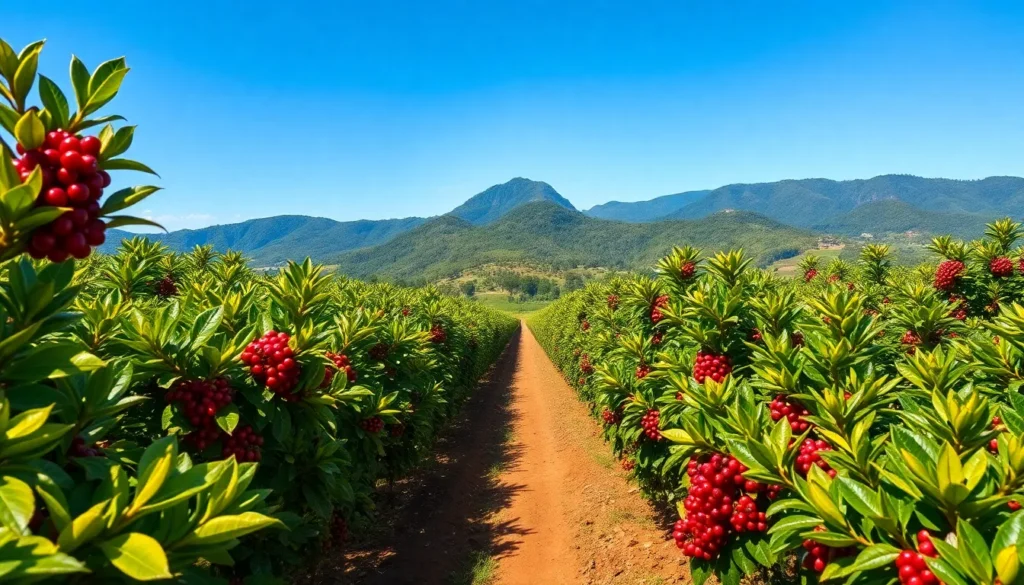
Coffee production plays a crucial role in the global economy, with specific regions dominating the industry.
Major Coffee Producing Countries
Brazil ranks as the leading coffee producer, accounting for approximately 36% of global output. Vietnam follows closely behind, contributing around 17% to worldwide production. Colombia also stands out, providing nearly 9% of the market share. Other notable producers include Indonesia, Ethiopia, and Honduras, each with significant production levels. Together, these countries represent over 60% of the total coffee exports, underscoring their importance in the coffee trade.
Impact Of Climate Change
Climate change poses significant challenges to coffee production, directly affecting yield and quality. Rising temperatures and unpredictable rainfall patterns lead to increased pests and diseases. These elements threaten the sustainability of coffee farms worldwide. Farmers often face difficulties adapting to these changes, resulting in lower incomes and potential crop failures. Innovative practices such as shade-grown coffee and organic farming emerge as possible solutions. Implementing these approaches can help mitigate some adverse effects while promoting environmentally friendly production techniques. The industry must prioritize sustainability to ensure long-term viability.
Coffee Trade Dynamics
The coffee trade operates through a sophisticated structure and complex pricing mechanisms, influencing both producers and consumers globally. Understanding these dimensions is essential for grasping the dynamics of the coffee industry.
Supply Chain Structure
The coffee supply chain consists of multiple key players. Producers grow beans in coffee farms, primarily in Brazil, Vietnam, and Colombia. Exporters handle the bulk movement of beans to importing countries. Importers then sell to roasters who prepare coffee for retail. Lastly, retailers, including coffee shops and supermarkets, provide the final product to consumers. Approximately 125 million people rely on this supply chain for their livelihoods. Each participant plays a critical role, impacting the quality and availability of coffee worldwide. Innovations in logistics and technology enhance efficiency, enabling more transparent tracking of the coffee from farm to cup.
Pricing Mechanisms
Pricing in the coffee trade is dictated by various factors. Global supply and demand fluctuations significantly affect market prices. Specialty coffee, which focuses on quality, commands higher prices due to its unique flavors. Fair trade certifications also play a crucial role in sustaining higher income levels for producers. Prices hover around $1.20 to $2.50 per pound but can jump significantly for premium varieties. Currency fluctuations and climate conditions contribute to volatility in pricing mechanisms, impacting both producers and consumers. Adapting to these changes remains essential for industry stability and sustainability.
Economic Impact Of Coffee Trade
The coffee trade significantly impacts economies worldwide. Approximately 125 million people rely on coffee farming for their livelihoods, which highlights its importance in providing employment.
Employment Opportunities
Job creation within the coffee industry spans various roles. Coffee farms alone employ millions of workers, including farmers, pickers, and laborers. Beyond cultivation, opportunities arise in processing, exporting, and retailing, which enhance the economy. Roasting facilities contribute to local employment, as do cafes and restaurants that serve coffee. The growth of specialty coffee shops continues to create new positions in different regions. Each of these roles plays a vital part in sustaining communities and supporting families.
Contribution To GDP
The coffee trade contributes significantly to the GDP of producing countries. Brazil, the leading coffee producer, accounts for about 36% of global production. Vietnam follows, contributing 17%, while Colombia adds nearly 9% to the market. These figures demonstrate the economic strength of coffee in these nations. Additionally, coffee exports bring substantial foreign currency, bolstering national economies. This sector fosters economic growth through trade, while investments in coffee-growing communities support local development, enhancing overall economic stability.
Challenges In The Coffee Trade
The coffee trade faces several challenges that impact its sustainability and fairness.
Fair Trade Issues
Fair trade practices aim to establish equitable relationships between producers and consumers. Many producers lack access to fair trade certifications, limiting their ability to participate in these beneficial programs. Unstable pricing continues to undermine producers’ incomes despite fair trade’s intent. Various exploitative practices exist within supply chains, which further complicate fair trade efforts. Only about 1.6 million farmers benefit from fair trade worldwide, leaving countless others without adequate support. Access to information and resources can significantly influence participation in fair trade initiatives, highlighting the need for stronger networks and education.
Sustainability Concerns
Sustainability remains a significant challenge in the coffee industry due to climate change. Increased temperatures and erratic rainfall patterns contribute to the rise of pests and diseases. Over 60% of the world’s coffee exports come from countries vulnerable to these environmental changes. Innovative practices like organic farming and shade-grown coffee are essential for mitigating negative impacts. Many farmers struggle to implement sustainable techniques due to financial constraints. The urgency for the coffee sector to adopt sustainable methods increases as global demand continues to rise, placing more pressure on an already strained ecosystem.
The coffee trade represents a vital component of the global economy and culture. As the demand for coffee continues to rise consumers are becoming increasingly aware of the ethical and sustainable practices that shape the industry. The journey of coffee from farm to cup highlights the interconnectedness of producers and consumers while underscoring the importance of fair trade and sustainability.
Challenges such as climate change and volatile pricing threaten the livelihoods of millions. However innovative practices and investments in coffee-growing communities offer pathways to a more equitable and sustainable future. As the coffee industry evolves it remains crucial for all stakeholders to prioritize transparency and support efforts that benefit both farmers and consumers alike. The future of coffee depends on their collective commitment to positive change.


